
Needs.
Change your heart, it will astound you.
I need your loving, like the sunshine.
And everybody's gotta learn sometime."
Context
This pattern, together with Wants and Non-Negotiables, maps the interior landscape each person brings into the dynamic. It deals with what is needed as a preliminary to what might be wanted — and The Contract becomes the vessel that holds these needs, providing the safe ground on which consent can actually be reached.
Core Dynamic
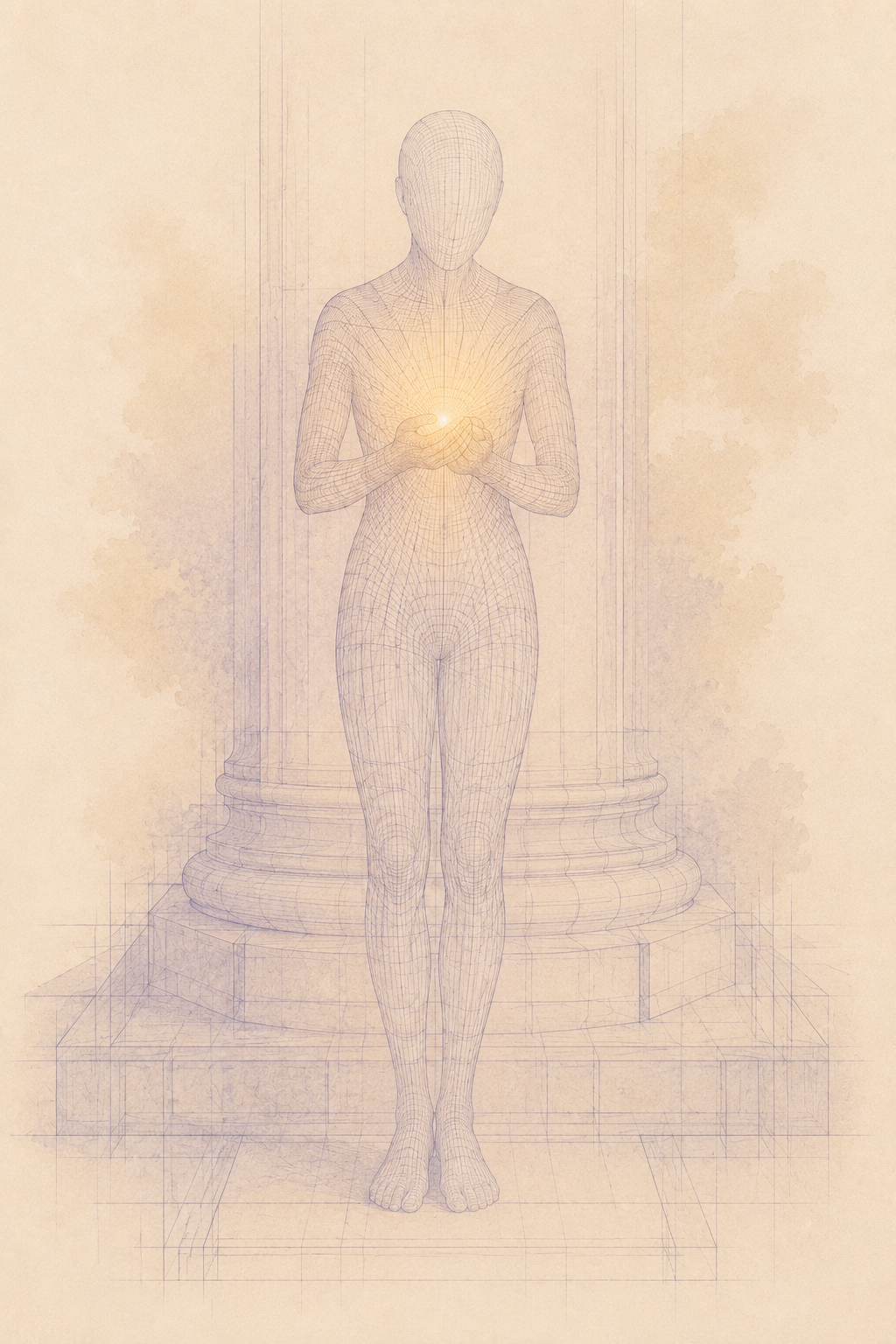
We need what we need. A need is not a preference. It is the thing whose absence changes who you are. And as consciousness and self-awareness grow, two things happen at once: it becomes clearer what is actually needed, and it becomes possible to need it less desperately — because the needs that trace back to old wounding and childhood injury can be integrated, held by a fuller, stronger self than the one that first carried them. Needs and wants can then reinforce each other in a particular way: I need to be held; I want to learn how to ask for what I need. The need is the root. The want is what grows from learning to voice it.
In a conscious kink dynamic, needs inform Why Would You from underneath — they are often stark pointers toward the shadow, the place where something didn't get what it required and has been asking for it, in disguised forms, ever since. They colour the nature of the relationship itself, because a relationship that cannot hold someone's real needs will eventually be lived around them rather than through them.
Needs can also transform through Surrender. There is a particular and unusual shift available here: the need itself can move, from needing something for oneself toward needing what the Master needs — your pleasure is my pleasure. This is not the erasure of need. It is need finding a new, larger shape, one no longer separate from the person it's offered to. Yes Sir lives partly here: not obligation, but a need that has genuinely reoriented itself.
There is no "I like it because I like it" in this pattern — though joy for the sake of joy is, of course, always welcome on its own terms. Needs ask for something more specific: to be met, in the way they actually require, at the time they actually arise, while their roots are also looked at honestly. Since needs so often point toward the shadow, the scene itself — toys, tools, bondage, the deliberate structures of play — can become a site of katharsis, where what the need was really asking for finally gets seen.
Possible Pathways
Each person in the dynamic identifies their actual needs — not their wants, not their soft preferences, but the things whose sustained absence would eventually make the dynamic unliveable. Name them specifically, through Direct Communications and Honesty. Treat the other person's named needs as structural information, not as requests that can be granted or denied based on mood. Stay curious about where a need actually comes from — not to diagnose it away, but to meet it more precisely, and to notice as it softens, deepens, or changes shape with time and integration.
Discussion
Identifying needs is harder than it sounds. People routinely misidentify wants as needs, or suppress genuine needs because they seem inconvenient or embarrassing. Some questions that help: What, in a previous dynamic or relationship, made you feel most sustained — not most excited, but most stable and alive? What, when absent for an extended period, makes you begin to withdraw or become difficult to reach? What do you find yourself asking for repeatedly, in different forms, because you haven't been able to ask for the actual thing directly?
Needs in D/s dynamics
Needs often crystallise around a few recurring themes: the need for genuine authority, not performed authority; the need for care that does not require asking for it; the need for consistency, the same person present in ordinary moments as in intense ones; the need for the dynamic to be taken seriously even when no scene is occurring.
The dominant's needs
The dominant role is often constructed as the one who provides rather than the one who needs. This is a distortion that costs dynamics dearly. Dominants have needs too: the need to be genuinely trusted, which is different from being obeyed; the need for the submissive's real self to remain present; the need for honest feedback, the only thing that makes real dominance possible rather than performance.
What naming does and doesn't guarantee
Naming a need does not guarantee it will be met. Some needs are incompatible between partners. Discovering this early, through honest naming, is painful and useful. Discovering it after years of unspoken resentment is worse. The Nameless Quality shimmers, when it appears here, in getting what you need, how you need it, when you need it — while also, at the same time, looking honestly at where the need came from. Both at once. Neither sacrificed for the other.
It also helps me to detect where the shadow has come over me. In situations where I don't feel trusted I can become conscious of this state, where my nervous system switched to 'unsafe modus' (sympathetic - engaging with the 'outside' world) because I have knowledge of this need. And this simple fact is enough to release the hold of the shadow on me in these moments.
Connected Patterns
This pattern lives in close, mutual company with Wants and Non-Negotiables — needs are the root these other two grow from, and feed each other in turn. Why Would You and Meeting the Shadow often surface exactly here, since unmet needs are among the clearest signs the shadow leaves behind. The Nature of Your Relationship is shaped by what gets named here, and The Contract holds it. Surrender and Yes Sir show what happens when a need reorients toward the other person entirely. Direct Communications and Honesty are what make naming a need possible at all. And as needs are integrated rather than merely managed, this pattern feeds Growth, Power, Potential, moving toward Growing Wholeness — the bell, once cracked by an unmet need, slowly mended.
"Change your heart, look around you..." — written by James Warren, originally performed by The Korgis, Dumb Waiters (1980). Covered by Beck for the soundtrack of Eternal Sunshine of the Spotless Mind (2004), Focus Features.