
Growing Wholeness.
Context
This pattern borrows its central idea from Christopher Alexander, whose work on living structures described a quality certain buildings, neighbourhoods, and systems have — and others lack — produced not by following a style but by developing in accordance with their own nature rather than an external template. Applied here, the same quality describes what a long-term conscious dynamic can do to the people inside it.
It connects to almost everything that precedes it. Why Would You, The Periodic Review, and Phases & Transitions are where it becomes most visible.
Core Dynamic
This pattern is not about becoming a better version of a generic template. It is about becoming more specifically, more deeply, more completely the particular person you already are. The submissive whose surrender has deepened across years is not following a curriculum — they are growing more fluent in their own nature. The dominant whose authority has grown quieter and more grounded is not performing a role with greater skill — that authority has simply become character, an expression of who they are rather than a technique they apply.
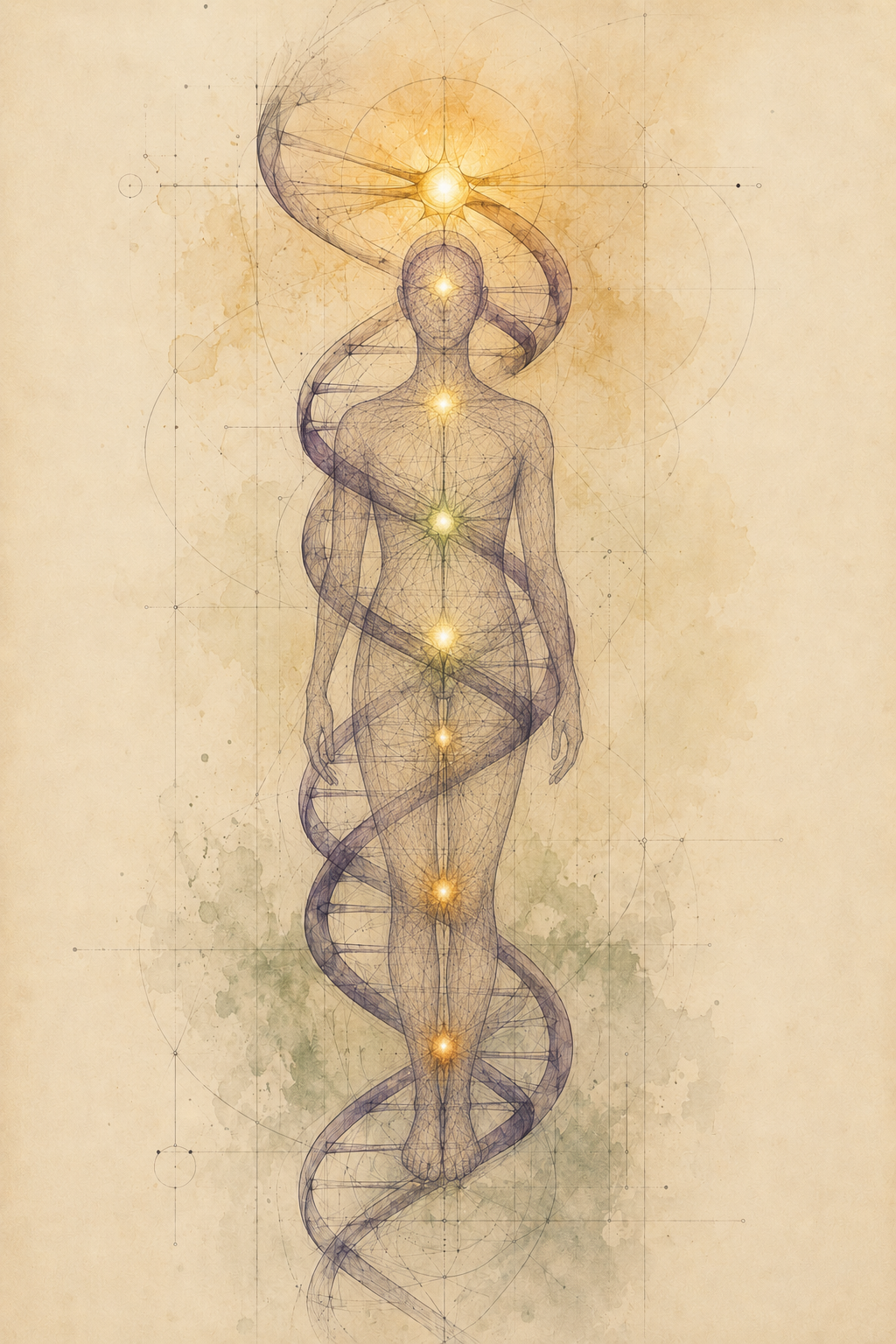
Needs and Wants, written into The Contract, function here something like DNA: two strands, distinct from each other, neither complete without the other, twisting together into a structure that carries the actual instructions for what this dynamic can become. Followed faithfully over enough time, that double helix doesn't just sustain the dynamic. It builds toward something larger than any single scene, any single agreement, any single year — wholeness, in the people living inside the structure they've built.
An unintegrated shadow works on a system the way a hairline crack works on a bell. The bell still rings. But the sound comes out muffled, slightly wrong, missing the fullness it was cast to produce. Wholeness is not the absence of that crack's history — it's what happens when the crack has actually been mended, when the parts that were split off and disowned have been brought back into relation with the rest. The bell rings whole again, not because nothing ever cracked it, but because the mending held.
A system that has come to experience itself as whole tends, almost automatically, toward better choices for itself as a whole. Not from rule-following, and not from moral effort — simply because a system in resonance wants, structurally, to keep resonating. Equilibrium becomes the thing it reaches for, the way a tuned instrument naturally wants to stay in tune.
Possible Pathways
Measure growth by specificity, not by improvement against a generic standard. Ask, periodically: am I becoming more myself, or simply better at performing a role I once chose?
Let Needs and Wants keep being revisited, the way DNA expresses itself differently as a body grows — not because the original code was wrong, but because growth was always part of what it encoded.
Bring whatever shadow material surfaces back into the relationship rather than working through it alone. We heal with others. A dynamic built consciously is one of the more direct containers available for exactly that kind of healing.
Discussion
There is a real difference between self-improvement in the ordinary sense and what this pattern describes. Self-improvement usually measures against an external standard — be more disciplined, more patient, more whatever the culture is currently praising. Growing wholeness measures against nothing outside the person at all. It asks only whether the latent has deepened, whether the present-but-unexpressed has finally found its form.
Wholeness is visible from outside
A dynamic producing growing wholeness tends to be recognisable to anyone watching closely, even without explanation. Both people are simply more themselves in it than they were when it began — and more themselves because of it than they would likely have become without it. This is, in the end, the deepest justification this entire language can offer for conscious practice. Not the pleasure it produces. Not even the structure it provides. What it does to the people inside it, across the years of an actual life.
No individual on an empty island
Wholeness, here, is never solitary. A person alone on an uninhabited island isn't an individual in any meaningful sense — individuality only exists in relation to others, defined by what it's distinct from. The same is true of this pattern. Growing wholeness doesn't happen through private introspection that's then brought, finished, into the dynamic. It happens inside the dynamic, between the people in it, through the exact friction and care and attention that relationship provides and solitude cannot. Meeting the Shadow happens, mostly, in front of someone else.
Potential and manifestation, at once
The Nameless Quality shows up here in a particular double form. It's both the direction a whole system naturally moves toward — pure potential, not yet arrived — and, in the moments when wholeness is actually felt, already fully present. Not a destination reached once and kept. A resonance the system keeps tuning itself back toward, across reviews and transitions, for as long as the dynamic lives.
[ Personal anecdote or teaching, to be added later. ]
Connected Patterns
This is, in a real sense, the deepest pattern in this language. It connects to Why Would You — growing wholeness is what that question's answer looks like, fully lived. It draws on Needs, Wants, and The Contract as the structure's living code, and on Growth, Power, Potential for its forward motion. The Periodic Review and Phases & Transitions are where its progress tends to become visible. Meeting the Shadow is the integration this pattern depends on. And it connects, in truth, to every pattern that precedes it — because wholeness is not a separate achievement. It's what happens when all the others are inhabited with genuine attention, for long enough.
"The goal of individuation is wholeness, not perfection." — C.G. Jung.