
Daily Consent Basics.
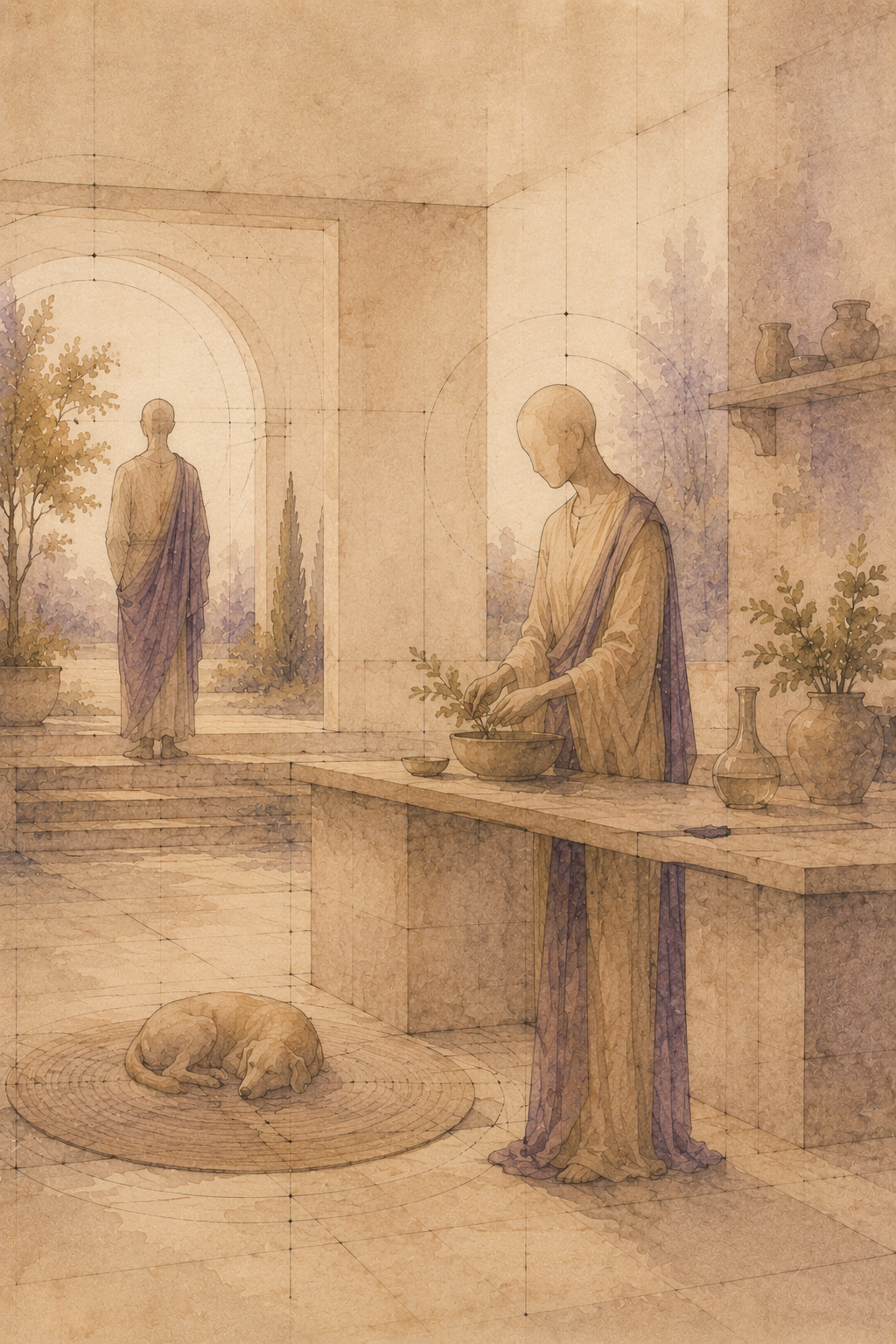
Context
Consent is both building trust and is being built on trust. While it is very much informed by the Contract and all that it pertains, everything in the dynamic needs to be consented to — even when it includes so-called Consensual Non-Consent, which is the situation where parties consent to not needing to consent to everything that plays out in the dynamic. The Protocol Gradient, Standing Orders and Structured Agreements all provide the framework in which this pattern takes place.
In a long-term power exchange, consent is not a threshold you crossed once. It is something you embody, every day, in the way you show up. And the answer to what consent looks like when nothing dramatic is happening: consent prevents any drama from happening, yet provides a safe container for any and every emotion — however fierce, overwhelming, cathartic — to have its rightful place.
Core Dynamic
In a total power exchange, the dynamic is always on. There is no scene to open and close, no rope to tie and untie. The structure is the relationship, and the relationship is continuous. This creates a question that never fully resolves: how does consent live inside something that never pauses long enough to be renegotiated?
One answer — the one the protocol tradition points toward — is that the daily practice of protocol is itself consent made visible. When a submissive follows a standing order without being told, they are not merely complying: they are actively choosing, again, to inhabit the structure they agreed to. The protocol is not a constraint imposed from outside. It is the form their ongoing consent takes.
The submissive who follows an order with full presence is consenting. The one who follows it while dissociated, exhausted, or resentful is complying. The structure looks identical from the outside. It is not identical. The dominant's daily responsibility is to maintain the conditions in which real consent remains possible — staying attentive to the difference between presence and performance, and creating the openings through which a shift can be named before it becomes damage.
Possible Pathways
Build lightweight consent check-ins into the daily rhythm — not as formal renegotiation, but as moments of genuine contact: how are you in this today? Make it structurally easy for either person to flag a shift without it becoming a crisis.
Design at least one regular moment — daily, weekly — where the submissive can speak freely about how the dynamic is landing, and where the dominant commits to hearing it without defensiveness. Treat continued, present participation as the signal of consent — and treat its absence, in any form, as information worth investigating.
Discussion
The zen garden of the dynamic
Consent is the zen garden of the dynamic — where everything looks natural but is in fact deliberate. The raked gravel, the placed stone, the carefully tended moss: none of it happened by accident, and yet the effect is one of effortless calm. This is what well-tended daily consent produces: a dynamic that breathes easily, that has space for everything that arises. Wu Wei and the tantric path can only unfold in a space that has been made safe enough to simply be with what is. Consent is what makes that space.
The guardian at the threshold
Consent is the guardian at the threshold of catharsis. The most intense experiences in a dynamic — the scenes that break something open, the moments of deep surrender, the edges where something true is found — are only accessible because the structure holding them has been consented to. Without that structure, intensity becomes exposure. With it, intensity becomes transformation. The container is what allows the fire. And the container is consent, renewed daily, held quietly, mostly invisible until the moment it is needed most.
The morning ritual as consent practice
Many TPE households use a morning ritual — a greeting, an affirmation, a physical gesture — as the daily opening of the dynamic. This is not merely ceremonial. It is a daily moment in which both people consciously re-enter the structure. The ritual that feels merely habitual from the outside carries, for the people inside it, the accumulated weight of every previous day it was performed. This is Life as a Ceremony in its most intimate form.
The Vanilla world and its prejudice
There is a connection worth naming with Vanilla: the Vanilla world may be prejudiced against anything of the dynamic that shows, meeting it with rejection, misunderstanding, or even challenging the consent itself as perhaps unhealthy or immoral. Knowing that the consent is real, is ongoing, and is freely given is the internal anchor that makes external judgment navigable.
Movement and manifestation
The daily practice of consent is rooted in intrinsic motivation — the genuine desire to honour the other's boundaries, and the trust that they will honour yours. Where that motivation is present, the structure holds itself. Where it begins to waver, no amount of protocol will compensate. In that sense, consent is a very rare and special something. It is both form and content, both outer and inner — both movement and manifestation.
The Nameless Quality
This pattern is a core building block for the Nameless Quality to shine. When consent is present and alive — not as paperwork but as a living orientation between two people — the dynamic becomes spacious. There is room for everything: for intensity and for quiet, for difficulty and for joy, for the full range of what two people can be together. The Nameless Quality does not arrive despite the consent structure. It arrives because of it.
Connected Patterns
This pattern builds on Standing Orders and connects forward to Negotiations and Consent Theory and Philosophy. It speaks to Life as a Ceremony — because the daily rituals that sustain consent are the same rituals that give the dynamic its texture. It connects to Periodic Review, where daily consent is examined at scale, and to Safety Within the Scene, which addresses consent in its most concentrated form. Safewords and Red Flags are the parameters that honour the boundaries of consent in practice.
"We're never so vulnerable than when we trust someone — but paradoxically, if we cannot trust, neither can we find love or joy." — Frank Crane, source unknown.