
Posture and Positioning.
Context
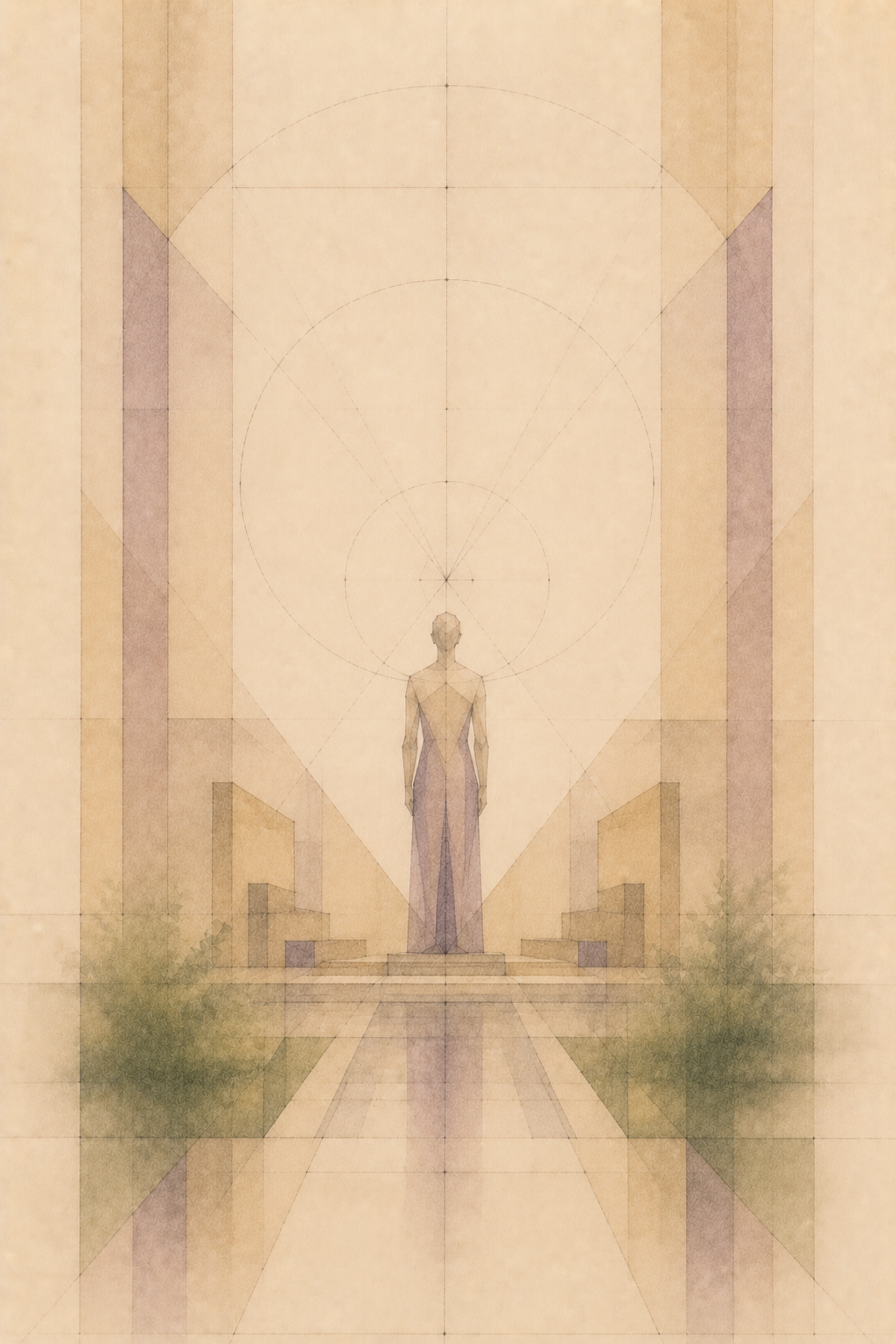
This pattern addresses the body as the primary instrument of presence in a conscious dynamic. Where the preceding patterns in this layer named the conditions and qualities of presence — availability, accessibility, attending — this one names its physical expression and anchor. The body is not the vessel through which the dynamic passes. It is the dynamic, made flesh. How we hold ourselves is how we are.
This pattern connects to Attending — posture is attending made visible in the body — and to Protocol Gradient, which determines what posture is appropriate in which register. It speaks to Sacredness and Life as a Ceremony — the body as temple, the posture as ceremony.
Core Dynamic
The inner posture reflects in the outer posture — and the outer posture shapes the inner. This is not a one-way relationship. The body that is held in a posture of full presence helps the mind arrive at full presence. The sub who assumes a devotional position is not only expressing surrender — they are deepening it through the physical act of assuming it. The dominant who enters a room with a particular quality of physical authority is not only performing dominance — they are inhabiting it more fully through how they move.
The body is our physical temple — the structure through which we are anchored to this moment, this room, this dynamic. Ram Dass's instruction is literal here: be here now. Physically present, mentally present, spiritually present in this moment in time. Posture is how the body says yes to that instruction. The slouch, the distraction, the half-turned shoulder — these are the body's way of being elsewhere. The upright spine, the open chest, the gaze that is present and directed — these are the body's way of being here.
In a conscious dynamic there are specific postures that carry specific meaning. The presenting posture — the body arranged to signal full availability and openness to the dominant's attention. The parade posture — upright, composed, the body expressing the internalized values of the dynamic without instruction. The devotional posture — kneeling, head bowed or eyes closed, the body surrendering to something larger than itself. Each of these is a protocol in the body, as real and as designed as any verbal agreement. Each says something that words cannot say as efficiently or as completely.
Sprezzatura is present here: the posture that has been so thoroughly absorbed that it is simply how the person stands — not maintained with effort but inhabited with ease. The sub who holds their presenting posture with genuine naturalness has arrived somewhere different from the one who is holding it as a discipline. And Jungian Archetypes move through posture too — the archetypal authority of the dominant is felt in how they carry themselves, and the archetypal surrender of the submissive is expressed in the opening of the body toward what it has chosen.
And when inner and outer fully align — when the posture is not maintained but simply inhabited, when the body and the being are in complete agreement with the situation — something else becomes available. Silence. Not the silence of having nothing to say but the silence of needing nothing more. The body fully present, the mind fully present, the dynamic fully present. In that alignment, the quality that this entire language reaches toward can simply arrive — not produced, not aimed at, but present in the way that morning light is present when the curtains are opened. The Nameless Quality, streaming from the pores of a dynamic that has come into full alignment.
Possible Pathways
Begin with the body. Before any protocol, any word, any agreement — notice how you are holding yourself right now. Where is the tension? Where is the absence? Where has the body already signalled something that the mind has not yet acknowledged? The body knows before the mind does. Posture is one of the ways it speaks.
Design the postures of the dynamic explicitly. In Structured Agreements, name which posture applies in which context. What does presenting posture look like in this dynamic? What does the waiting posture ask? What does the devotional position mean and when is it appropriate? The more specifically this is designed, the more fully it can be inhabited.
Practice using posture as a tool for arriving. When the mind is elsewhere, when the dynamic feels distant, when presence has thinned — use the body to return. Assume the appropriate posture deliberately, and notice what follows. The body, when it is placed in right relationship to the dynamic, tends to bring the rest of the person with it.
Discussion
The Tantric tradition has always understood the body as a gateway rather than an obstacle. What moves through the body in a moment of genuine physical presence is not only neurological — it is energetic, archetypal, larger than the personal. The posture that opens the body to the dynamic also opens it to what the dynamic can carry. This is why specific postures have been developed across spiritual traditions: not as rules but as instruments, refined over time, for creating the conditions in which something particular becomes more available.
Silence as the fruit of alignment
When inner and outer posture fully align — when the body is completely at home in the dynamic and the dynamic is completely at home in the body — silence becomes natural. The talking, the managing, the filling of space with words all arise from the gap between where one is and where one wants to be. When that gap closes, the need for words closes with it. The silence that falls in a dynamic that has achieved this alignment is not empty. It is full — of presence, of contact, of everything that does not need to be said because it is already being lived.
Posture and the dominant
Posture is as much the dominant's practice as the submissive's. The dominant who enters a room with a quality of physical presence that says something without announcing it — whose authority is carried in how they move rather than how they speak — is practising this pattern. The one whose physical presence collapses when not in the explicit dynamic has not yet brought the outer posture in alignment with the inner one. What Would Master Do is partly a question about posture: how would the dominant carry themselves here? How would their body express the values of the dynamic in this context?
Connected Patterns
This pattern is the physical expression of Attending — posture is attending made visible in the body. It builds on Protocol Gradient and Structured Agreements, which define what posture is appropriate in which context. It speaks to Surrender and Dominance — both are expressed and deepened through the body. It connects to Life as a Ceremony and Sacredness — the body as temple, the posture as ceremony. It speaks to What Would Master Do — the dominant's values carried in the body. It connects to Sprezzatura — the posture absorbed so completely it has become simply how one is — and to Jungian Archetypes and Tantra — the body as the instrument through which archetypal and energetic forces move. And it leads, when inner and outer fully align, toward The Nameless Quality — which becomes available in the silence that falls when the body, the being, and the dynamic are in complete agreement.