
Jungian Archetypes.
The Framing
This pillar is one of six that together both form the philosophical ground beneath this pattern language — and the vault that overarches the entire work. They do not lead to a destination. Each one, when genuinely practised, is itself an expression of what this language calls The Nameless Quality: the aliveness that emerges when a conscious kink dynamic is fully inhabited rather than performed. The Jungian Archetypes show up in the shadow and the unconscious — in the parts of the Self the persona keeps hidden. When the archetypes are met consciously, when the roles are inhabited rather than worn, when individuation has done enough of its work, the personal falls away and something larger moves through. The pattern language, deeply practised, arrives at the same place by a different route.
The Tradition
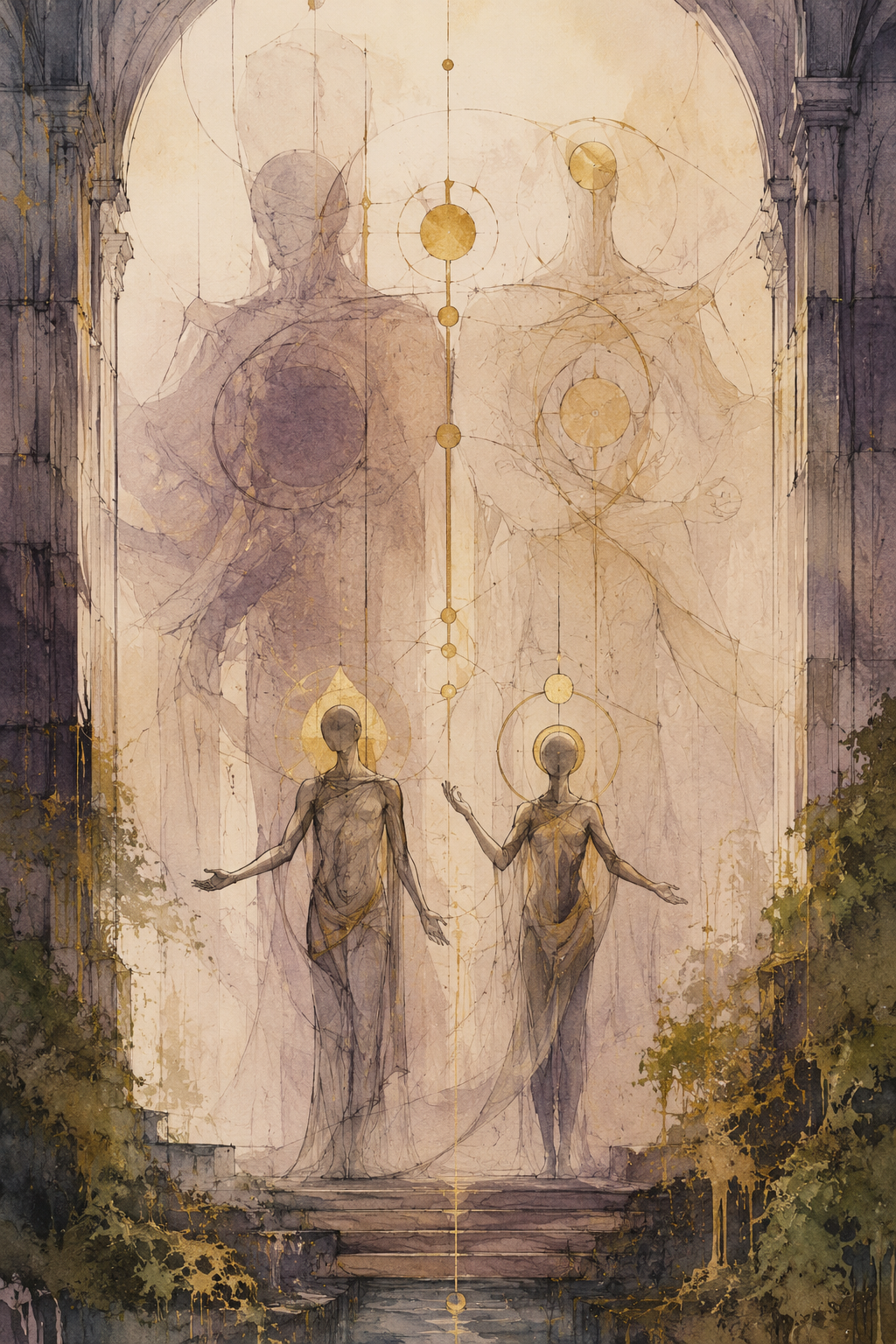
Carl Gustav Jung proposed that beneath the personal unconscious — the layer of repressed memories, forgotten experiences, private wounds — lies a deeper layer shared by all human beings: the collective unconscious. This layer is not personal. It was never personal. It is the accumulated psychic inheritance of the species, expressed through recurring figures that appear in dreams, myths, fairy tales, and religious imagery across all cultures and times.
These figures Jung called archetypes — not fixed images, but dynamic patterns of energy: the Hero, the Shadow, the Anima and Animus, the Self, the Trickster, the Great Mother, the Wise Old Man. Each one a force, not a character. A gravity, not a costume. This pillar underlies the entire language — because the roles, the rituals, the surrender, the authority, the shadow work and the catharsis that the patterns describe are all expressions of archetypal energies moving through human beings who have chosen to meet them consciously.
In the Dynamic
When you read Dominance (#05) and Surrender (#06) through this lens, the roles are no longer simply chosen preferences — they are archetypal configurations that arise from the depths of the psyche with an energy that no amount of intellectual framing fully explains. The dominant who fully inhabits their role is not performing power. They are channelling something that wants to move through them. The submissive who fully surrenders is not losing themselves. They are meeting a part of themselves that could not be reached any other way.
When you read Needs (#09) and Wants (#10) through this lens, the inventory of desire becomes a map of which archetypal energies are asking to be met — and which have been starved. When you read Extraordinary Protection (#03), you understand why the container must be so carefully built: what moves through a genuine scene is not small, and the person through whom it moves needs to be held.
The Shadow is particularly relevant to Meeting the Shadow (#02) — the pattern most directly named after Jungian work — but it also underlies Punishment and Correction (#54), On the Nature of Pain (#48), and Wilful or Negligent Failure to Comply (#58) — each of which names a moment where something unconscious surfaces and must be met rather than managed.
Douglas Thomas describes BDSM as a form of individuation — the Jungian process of becoming whole by integrating the split-off parts of the psyche. Harrington's Sacred Kink points in the same direction: those called to Mastery or slavery as a full path are following an archetypal calling that, when answered consciously, becomes a vehicle for genuine transformation.
The Scene (#43), The Underworld Journey (#42), and Katharsis (#50) are where archetypal forces become most palpably present — where the ritual container, the altered state, and the release are not just psychological events but something older and larger moving through two people who have prepared the ground for it.
Possible Pathways
Ask yourself which archetypes are alive in your dynamic — not as costumes you wear, but as energies that move through you when you are most fully in your role. Notice which figures from myth, story, or dream feel close to your experience of dominance or submission. Work with these figures consciously: name them, study them, let them teach you something about what you are carrying and what is carrying you. And attend to the Shadow — the parts of the archetypal energy that you have not yet been able to own. They are present in the dynamic whether you acknowledge them or not.
Discussion
One of the most useful Jungian concepts for understanding D/s dynamics is the distinction between persona and Self. The persona is the mask — the social face, the performed role, the character we present to the world. The Self is the deeper organising principle of the whole psyche, what Jung called the God within. In ordinary social life, most people live almost entirely in the persona. The D/s dynamic, at its best, strips the persona away. The submissive cannot maintain their social mask while genuinely surrendering. The dominant cannot hide behind politeness while genuinely holding power. This stripping away is one of the reasons the dynamic can feel so alive — and why Sacredness (#23) and Life as a Ceremony (#22) are not decorative additions to the language but structural necessities.
Anima, Animus, and the erotic charge
Jung's Anima — the feminine principle within the male psyche — and Animus — the masculine principle within the female psyche — are the archetypes most directly implicated in erotic attraction. We are drawn to people who carry, on the outside, what we carry on the inside but have not yet integrated. The Dom drawn to a particular quality of surrender in their sub may be drawn to the unintegrated surrender in themselves. The sub drawn to a particular quality of authority in their Dom may be drawn to the unintegrated authority in themselves. This does not make the attraction less real. It makes it more meaningful — and more instructive. It also helps explain why The Nature of Your Relationship (#04) asks such foundational questions: what you are building together is partly determined by what each person is carrying and seeking to integrate.
Inflation and possession
There is a danger in archetypal work that Jung called inflation — when the ego identifies with the archetype rather than being a vehicle for it. The dominant who begins to believe they genuinely are the archetype they are channelling — who loses the human being inside the role — is in inflation. So is the submissive who has surrendered so completely that they have lost access to their own judgment and will. This is precisely why Non-Negotiables (#11), Safe Words (#25), and Red Flags (#26) exist — not as bureaucratic formalities but as the structural protection against the moment when archetypal energy overwhelms the human being carrying it.
Douglas Thomas, The Deep Psychology of BDSM and Kink: Jungian and Archetypal Perspectives on the Soul's Transgressive Necessities (Tantor Audio, 2024). Lee Harrington, Sacred Kink: The Eightfold Paths of BDSM and Beyond (Mystic Productions Press, 2009).
Connected Patterns
This pillar is the philosophical ground beneath the entire Foundation layer — most directly Why Would You (#01), where the archetypal calling first makes itself felt, and Meeting the Shadow (#02), which is the most explicitly Jungian pattern in the language. It underlies Dominance (#05) and Surrender (#06) — both archetypal configurations as much as personal choices — and Extraordinary Protection (#03), because what moves through an archetypal dynamic requires a container equal to its force. It informs Needs (#09) and Wants (#10) as archetypal signals, and connects to Sacredness (#23), Life as a Ceremony (#22), and The Collar (#24) — ritual as the language through which archetypal energies are given form. In Practice it connects most deeply to The Underworld Journey (#42), Katharsis (#50), On the Nature of Pain (#48), and Punishment and Correction (#54). The structural protections — Non-Negotiables (#11), Safe Words (#25), Red Flags (#26) — exist in part because of what this pillar describes. And all roads lead toward The Nameless Quality (70+1) — which is what emerges when the archetypal energies are fully in play and the persona has been set aside.