
Conscious Kink.
Context
This pattern names the orientation that the entire language rests on. Every pattern in this language is an expression of conscious kink — the use of power exchange, sensation, ritual, and the edges of ordinary experience as instruments of presence, growth, and transformation. This pattern asks: what makes kink conscious? And what becomes possible when it is?
This pattern reaches back to Why Would You — the foundational question — and connects to every layer of the language. It is the philosophical ground beneath all practice. It leads toward The Nameless Quality — which is what conscious kink, at its fullest, makes possible.
Core Dynamic
Conscious kink is older than the word. The medieval monk who flagellated himself in the pre-Reformation tradition — before the body was declared sinful — was not punishing himself. He was using the body as an instrument of ecstasy, driving himself toward a state of altered consciousness through self-administered intensity. The fakir on the bed of nails. The shaman who fasts, dances, and endures physical hardship to move between worlds. The plant medicine ceremony that brings the body and nervous system to the edge of what they can hold, in order to open what ordinary consciousness keeps closed. These are not aberrations in the human story. They are among its oldest threads — the deliberate use of the body's edge experiences as a path to something that transcends the ordinary self.
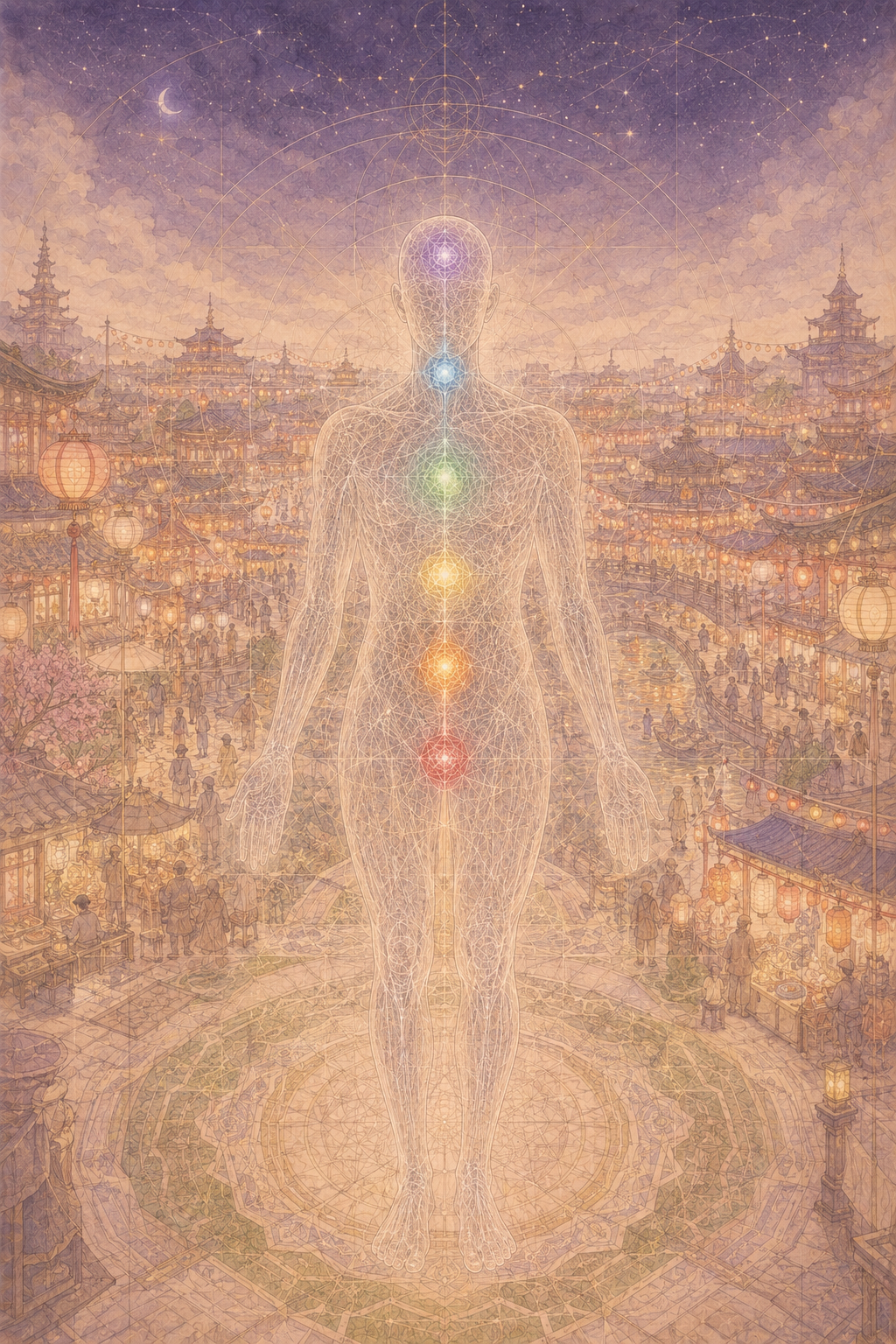
What unites all of these — and what unites them with a conscious kink scene today — is the nervous system. Without the nervous system there is no experience. The vagus nerve, the body's primary instrument of self-regulation, is the anatomical ground of every altered state, every moment of surrender, every experience of genuine safety that makes depth possible. Stephen Porges' polyvagal theory describes how the nervous system moves between states of threat and safety, and how the social engagement system — activated by genuine connection and trust — is the prerequisite for the kind of open, receptive presence that conscious kink at its best produces. Peter Levine's work on trauma and the body names the same territory from the healing direction: the nervous system stores what has not been processed, and the body, given the right conditions, can release it. Gabor Maté's work connects this to the whole arc of a human life: the wounds of early experience live in the nervous system, and the practices that reach the nervous system directly are among the most powerful instruments of healing available.
Carolyn Elliott's Existential Kink names what is at the very bottom: the things we most resist and most hide are often the things our deeper self is most drawn to. Kink, in this frame, is not a deviation from the path of growth. It is often the path of growth, wearing an unusual costume. The desires that the culture calls shameful are frequently the desires that carry the most energy, the most potential, the most unintegrated vitality. Conscious kink is the practice of meeting those desires with awareness rather than shame — bringing them into the light not to act them out unconsciously but to understand what they are carrying, and to work with that consciously.
On a neurobiological level, the difference between a kink scene and a trip to an amusement park is smaller than the culture would like to admit. The tension in the queue for the rollercoaster — the anticipation, the mild dread, the excitement — activates the same hormonal landscape as the anticipation before a scene. The rush of the drop, the adrenaline, the laughter afterward — these are the same systems. The difference is that conscious kink works with this deliberately, with full awareness of what is being activated and why, in a container designed to make the activation as safe and as purposeful as possible.
The philosophical pillars of this language — Wu Wei, Tantra, Omakaze, Sprezzatura, Jungian Archetypes — are not decorative additions to a kink practice. They are the deeper grammar of conscious kink itself. Wu Wei: the scene that follows what is alive rather than what was planned. Tantra: the body as gateway rather than obstacle. Omakaze: the surrender of the menu in trust that what arrives will be better than what was ordered. Sprezzatura: the practice so deeply absorbed that it has become effortless. And the Jungian archetypes: the recognition that what moves through a conscious kink scene is not only two people but something much larger — the oldest human impulses toward surrender, authority, transformation, and the sacred.
Possible Pathways
Ask what your kink is in service of. Not as a demand for justification — desire needs no justification — but as genuine curiosity. What is this opening? What is this reaching toward? What would you find if you followed this thread all the way to its source? The answer to that question is the beginning of conscious kink.
Study the nervous system. Not because kink requires a neuroscience degree but because understanding how the body moves between threat and safety, how the vagus nerve regulates the whole system, how trauma lives in the body and how the body can release it — this knowledge makes everything safer, deeper, and more intentional. The dominant who understands polyvagal theory reads a scene differently. The submissive who understands their own nervous system's patterns brings different awareness to what they are seeking.
Place your practice in its larger context. Read the history. The flagellant monks, the fakirs, the shamans, the tantrikas — these are your ancestors in this work, whether you claim them or not. Knowing that what you are doing is as old as human consciousness does not make it less personal. It makes it larger. And in that largeness, the shame that the culture tries to attach to these desires loses much of its power.
Discussion
The cultural narrative about kink — that it is deviant, that it is about sex, that it is something people do because something went wrong in their development — is not only inaccurate. It is historically illiterate. Every major spiritual tradition has practices that work with the body's edge experiences as instruments of transcendence. The body has always been used as a path to what lies beyond the ordinary self. What has changed is not the practice but the context — and the loss of the sacred container that once held these practices.
The nervous system as sacred instrument
Porges' polyvagal theory is one of the most important frameworks for understanding why conscious kink works when it works. The nervous system has three states: the ventral vagal state of social engagement and safety, the sympathetic state of mobilisation and threat response, and the dorsal vagal state of shutdown and freeze. Genuine surrender — the kind that conscious kink at its best produces — requires the ventral vagal state: the nervous system that feels safe enough to open. The dominant who understands this builds the conditions for that state consciously — through attunement, through presence, through the quality of their attention before a single touch is given.
Kink and the healing of trauma
Peter Levine and Gabor Maté both point toward the same territory from different directions: trauma lives in the nervous system, and the nervous system can heal. Levine's somatic experiencing approach works with the body's incomplete trauma responses — the mobilisation that was interrupted, the energy that was stored rather than released. Conscious kink, when it works with the body's edge experiences in a genuinely safe container, can access and release that stored energy in ways that talking therapies often cannot. This is not a claim that kink is therapy. It is the recognition that the body has its own wisdom, and that the practices which honour that wisdom — including conscious kink — are legitimate instruments of healing.
Connected Patterns
This pattern is the philosophical ground of the entire language — it connects to everything and is informed by everything. It reaches back to Why Would You and Meeting the Shadow — the foundational questions. It speaks to Surrender and Dominance as its primary expressions. It connects to Growth, Power, Potential — conscious kink is in service of expansion, not consumption. It speaks to all six philosophical pillars — Jungian Archetypes, Sprezzatura, Wu Wei, Tantra, Omakaze — which are not additions to conscious kink but its deeper grammar. It connects to Sensory Experience, The Underworld Journey, The Scene, and Katharsis as its primary practical expressions. And it leads, always, toward The Nameless Quality — which is what conscious kink, at its fullest and most alive, makes possible.
Carolyn Elliott, Existential Kink (2020). Stephen Porges, The Polyvagal Theory (2011). Peter Levine, Waking the Tiger: Healing Trauma (1997). Gabor Maté, The Myth of Normal (2022). Lee Harrington, Sacred Kink (2009). Douglas Thomas, The Deep Psychology of BDSM and Kink (Tantor Audio, 2024).